
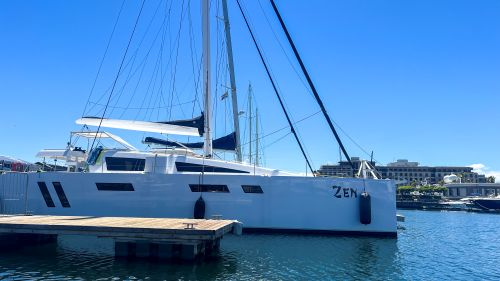
A view of the harbour in Cape Town. Photo: Hope Mukami, bird story agency
Cruise destinations across Africa are trying to turn short port calls into safari, wildlife, cultural and inland tourism spending. Cape Town is showing how quickly the market can grow, while Kenya is testing ways to move more passengers from the coast into national parks and other high-value experiences.
Bonface Orucho, bird story agency
Africa has spent years competing for cruise ships. It is now competing for the money passengers spend once they arrive.
Cape Town opened its 2026/27 cruise season on September 17 when Pacific World arrived with 1,397 passengers, predominantly from Japan, and 655 crew, according to Wesgro, the official tourism, trade and investment promotion agency for Cape Town and the Western Cape.
The arrival follows three years of rapid growth. Cape Town received 70 cruise vessels carrying about 78,000 passengers in the 2022/23 season. By 2024/25, that had reached 79 vessels and 127,000 passengers, according to the Seatrade Africa E-report.
Passenger numbers grew at an average annual rate of 16% over the period, compared with a 9% global industry average.
The economic contribution has grown alongside passenger numbers. Cruise tourism contributed R4.34 billion (US$252 million) to Western Cape GDP and R5.32 billion (US$309 million) to South African GDP across three seasons. The sector also generated R3.04 billion (US$177 million) in cumulative foreign-exchange earnings, according to Wesgro.
The spending is not staying at the main terminal.
Mossel Bay, Hermanus and Saldanha Bay recorded 32,000 passengers across 26 ship visits in 2024/25, generating R47.5 million (US$2.8 million) in local expenditure, according to the Seatrade report.
That wider distribution is becoming a bigger part of the cruise business as ports invest in infrastructure and destinations build more products around passengers.
Cape Town’s cruise terminal at E-Berth forms part of a R20 billion (US$1.16 billion) precinct redevelopment. Mossel Bay opened a new cruise reception facility in 2025, while Saldanha Bay has moved towards becoming a formal Port of Entry and Exit.
The shore experience is changing too.
Passengers can now move from Cape Town into Bo-Kaap heritage walks, Langa and Khayelitsha food and entrepreneurship tours, or the Winelands around Stellenbosch and Franschhoek. In Ghana, cruise operators are selling Cape Coast and Elmina heritage experiences that include markets and drumming workshops.
The shift matters because cruise passengers have limited time onshore. A port that can connect a ship call to several local businesses and attractions has more opportunities to capture spending before the vessel sails.
Kenya is pushing that connection further into the country’s safari economy.
In March, the Kenya Wildlife Service introduced a 30% group incentive for cruise travellers visiting national parks including Tsavo East, Tsavo West and Amboseli.
About 20% of cruise passengers currently extend their trips to parks and reserves. The government wants to raise that to 40%, which it estimates could increase overall park revenues by up to 40%.
The programme was developed with Pollmans Tours & Safaris to make group excursions easier to coordinate around cruise schedules, with international operators including Abercrombie & Kent also being brought into the market.
The economics are already visible. A Ministry of Tourism calculation cited by the Kenya News Agency estimated that a short cruise stop could generate about Sh50 million (US$387,000). A group of 70 tourists travelling to the Maasai Mara was estimated to inject Sh23 million (US$178,000) into the economy within a few hours.
Kenya is targeting Sh2 billion (US$15.5 million) from 12,000 cruise tourists.
The constraint is, however, time. Mombasa’s cruise passengers have to clear the port, travel inland and return before their vessel departs. The shorter the call, the more important transport, park access and excursion planning become.
The opportunity is also changing as cruise itineraries become longer and more specialised.
Expedition calls to Cape Town rose from five in 2023/24 to 16 in 2024/25, according to Seatrade. These passengers typically spend more and are more likely to book extended land programmes.
European Cruise Service opened African Cruise Service in Walvis Bay in late 2025, another sign that operators see room for more expedition and land-based products around African ports.
AmaWaterways added four Africa Safaris & Wildlife itineraries in August 2026, combining its Chobe River cruise with land programmes covering destinations including Namibia, Kenya and Victoria Falls.
One itinerary combines the Chobe River and Victoria Falls with Namibia’s NamibRand Nature Reserve, Etosha National Park and the Skeleton Coast. Another links the river cruise with Amboseli and the Maasai Mara.
Namibia has been working to strengthen Walvis Bay as a tourism gateway. In July, the Namibia Tourism Board and Ministry of Home Affairs brought together port authorities, tourism operators, government agencies and private-sector players to improve passenger facilitation and the country’s cruise offering.
The products around Walvis Bay extend beyond wildlife. Sandwich Harbour, the Namib Desert and other coastal and desert experiences give passengers ways to spend beyond the terminal.
West Africa is producing another growth story.
Cape Verde recorded 110,554 cruise passengers and 250 calls in 2024, up from 86,945 passengers and 171 calls in 2023, according to Seatrade.
Global Ports Holding expanded its African operation to Mindelo in 2025 after first entering the continent through La Goulette in Tunisia. The investment puts one of Africa’s fastest-growing cruise markets into the network of a major global port operator.
Benin is building its own position in the Gulf of Guinea.
A Seabourn Sojourn call in 2025 marked a major return for international cruise tourism after years of limited activity. Benin now exempts cruise passengers staying less than 72 hours from visa requirements and plans to develop a dedicated cruise quay by 2027.
The visa policy addresses one of the biggest constraints on short cruise visits. Passengers can move quickly from the ship into local tourism experiences without facing the same entry process as longer-stay visitors.
Mozambique is trying to spread the value of cruise arrivals through Maputo.
The port expects 15 cruise calls and close to 16,000 visitors in 2026. Authorities are coordinating arrivals with the National Tourism Institute and FEIMA, where passengers can buy local handicrafts and experience Mozambican food and culture.
Mozambique received nine cruise ships carrying 4,492 tourists in 2024. Some 2,069 passengers disembarked to visit attractions and spend money on local experiences.
Tanzania has also seen rapid tourism growth. The country recorded 5.3 million visitors by April 2025, exceeding its five-million target, while tourist arrivals reached 794,102 between January and May, 54.3% above the pre-pandemic level.
Dar es Salaam and Zanzibar are the country’s main cruise gateways, with ships including Seabourn Sojourn, Europa, Norwegian Dawn and Viking Sky calling in 2025. From Dar es Salaam, short safari programmes can connect cruise passengers to Mikumi and Nyerere national parks.
Seychelles is putting economics into a national strategy.
The island nation recorded 41 cruise calls in the 2025/26 season, up from 35 the previous season, including eight maiden calls. Its tourism authorities are targeting smaller, premium and expedition vessels as part of a push towards higher-value cruise tourism.
A UNECA cost-benefit analysis estimates that cruise tourism could contribute US$531 million directly to Seychelles’ GDP between 2026 and 2033 and US$1.247 billion when multiplier effects are included.
The analysis also puts environmental costs at US$35.2 million and social costs at US$86 million over the period. It identifies reducing economic leakage as one of the ways to increase the benefits retained by the country.
That is becoming the central business question for African cruise destinations.
A passenger arriving in Africa does not automatically mean that most of their spending stays in Africa. Cruise operators, international suppliers and other parts of the global tourism chain can capture a large share before local businesses see the money.
Connecting passengers to local guides, transport operators, restaurants, accommodation, crafts, cultural attractions and national parks gives destinations more opportunities to retain that spending.
The Red Sea disruption is creating another opening.
MSC Cruises revised MSC Magnifica’s 2026 world cruise to avoid the Red Sea and added calls in Seychelles, Mauritius, Réunion, Durban, Cape Town, Walvis Bay and Cape Verde.
The change puts more African ports into long-distance cruise itineraries at a time when operators are adjusting routes around security risks in the Red Sea.
Mombasa is entering another Indian Ocean cruise circuit after its previous season ended in April. Kenya is expecting additional calls before the current circuit ends.
bird story agency
Leave a Reply