
From Sandra Prufer, ANA Bonn Correspondent at SB 64 Climate Conference
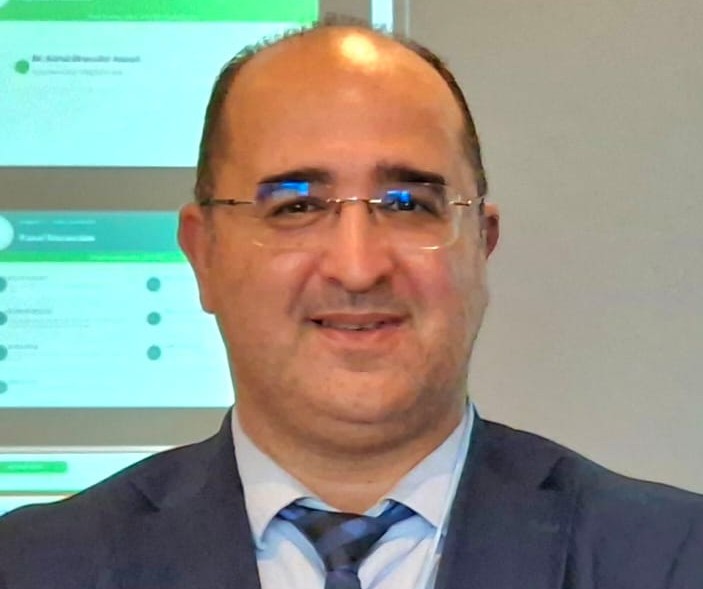
Photo Credit: Sandra Prufer/ANA Bonn Correspondent
Bonn, 11 June 2026
The Director of Climate Change and Biodiversity in Morocco, Rachid Tahiri today observed that although Africa contributes “only a small share of global greenhouse emissions,” it remains among the most vulnerable to climate impacts.
Speaking at the UNFCCC SB64 Side Event in Bonn, he stressed that climate action was not only a question of technologies, infrastructure or finance, “it also requires people with the knowledge, skills and capacities needed to understand climate risks, support transformation, innovate, and participate actively in building a low-carbon and climate-resilient future.”
Mr Tahiri, who is also the Director of UNFCCC National Focal Point for Morocco, observed that education plays a useful role in matters relating to investments in human capital, climate literacy, youth empowerment and lifelong learning.
“In Morocco, we consider education, awareness-raising and capacity-building as fundamental enablers of climate action,” he stressed, adding that, “they are essential to support behavioural change, prepare future generations, strengthen institutions and equip workers, territories and communities with the skills required for a just, inclusive and sustainable transition.”
The UNFCCC Side Event was entitled: “ESD and Climate Action in Africa: Leveraging SDG 4.7 to Advance SDG 13 through Lifelong Learning”.
Tahiri says that with Morocco’s objective of 53 percent emission reduction by 2035 and a portfolio of more than 190 mitigation and adaptation projects, his country’s NDC 3.0 clearly shows that implementation depends on capacities.
Climate education in Africa
In his keynote address, Nana Dr Antwi-Bosiako Amoah, who chairs the Africa Group of Negotiators on Climate Change (AGN), stressed that climate education in Africa was not a side issue but forms part of the climate infrastructure.
Climate education, says Dr Amoah, was crucial in helping the public to understand climate risks and make informed choices and act.
Measures needed to curb climate mishap were important, however, they work best when people understand them, trust them and take part in them, says Dr Amoah.

Nana Dr Antwi-Bosiako Amoah/Credit: Sandra Prufer/ANA Bonn Correspondent
“Africa has contributed least to climate change, but many African communities face some of its hardest impacts. This is why Africa continues to call for climate justice, stronger adaptation support, predictable finance, technology transfer, and capacity-building, adding that education was a climate solution.
According to Dr Amoah, SDG 4.7 creates a strong basis for action, he called on the international community to ensure that learners gain the knowledge and skills needed for sustainable development, global citizenship, human rights, gender equality, peace, and respect for cultural diversity.
He observed that, for Africa, SDG 4.7 was not only an education target, but it was also a climate action target.
The Bonn Climate Conference brings together Climate negotiators to discuss a range of issues from mitigation to adaptation, finance to technology and capacity building.
Dr Amoah described the UNFCCC process as a clear path through Action for Climate Empowerment, commonly known as ACE.
“ACE focusses on education, training, public awareness, public participation, access to information, and international cooperation,” he stressed, adding that the Glasgow Work Programme on ACE points to policy coherence, coordinated action, tools and support, and monitoring and reporting.
Dr Amoah emphasised the need for Climate education to be practical and local, particularly for Africa, adding, “it must speak to drought, floods, coastal erosion, climate-smart agriculture, clean cooking, renewable energy, water security and local knowledge.”
Drawing extensively on Climate education, Dr Amoah said it must be part of schools, universities, technical and vocational training, teacher education, public service training, media work, community learning and adult learning.
The Conference, know as SB64, would prepare decisions for adoption at COP 31 in Antalya, Türkiye in November this year.