
Photo Credit: AfricaNewsAnalysis/AM
25 January 2026
The International Green Week (Grüne Woche) ended in Berlin, the German capital with over 350,000 visitors at the Berlin Exhibition grounds.; representing an increase of around 40,000 visitors compared to the previous year.
The fair, attracted leading politicians from Germany and abroad, exceeded expectations on its centenary year.
Federal President Frank-Walter Steinmeier, Federal Chancellor Friedrich Merz, seven federal ministers, and numerous state premiers offered their personal congratulations.
For ten days, the Berlin Exhibition Grounds served as the most important international meeting place for agriculture, the food industry, and horticulture.
Among items on the business calendar of the Green Week include current developments, new products, and international perspectives.
This year centenary fair welcomed around 1,600 exhibitors from over 50 countries who offered products ranging from traditional specialities and innovative product ideas to vegetarian and vegan nutrition and reduced sugar concepts.
This year’s partner of the Green Week, Mecklenburg-Western Pomerania impressively showcased the culinary and tourist diversity of the northern federal state.
In addition to the diverse range of culinary delights on offer, the focus was on key issues for the future – from food security and water resilience to sustainability and animal welfare to innovations in agriculture and food production. Historical insights – such as those provided in the special exhibition “100 Years of Grüne Woche” – were combined with modern technologies and new food trends, bringing the changes in the industry over the course of a century to life.
Dr. Mario Tobias, CEO of Messe Berlin, stressed that “The enormous interest among visitors was overwhelming. The Grüne Woche 2026 impressively demonstrated that even after 100 years, it is as relevant as ever.
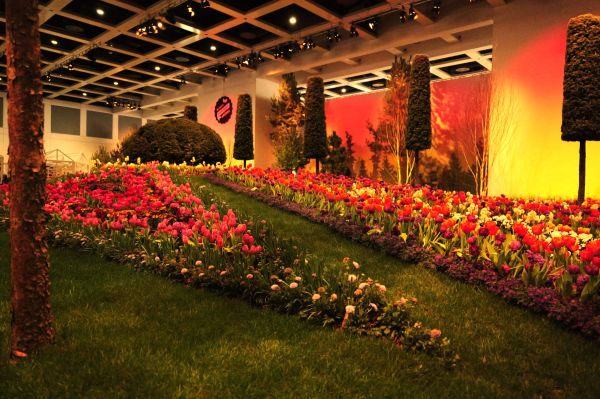
Photo Credit: AfricaNewsAnalysis/AM
“The positive atmosphere in the halls, intense debates, and significant political interest make it clear: Grüne Woche is the meeting place for politics, business, and society, and provides an attention-grabbing stage for public discourse on agriculture and food. This great success is only possible thanks to the commitment of the exhibitors, partners, federal states, international participants—and, last but not least, the visitors. We would like to express our sincere thanks to all of them: they are the driving force behind Grüne Woche and are laying the foundation for the next 100 years.”
Grüne Woche 2026 once again confirmed its role as the political place to be at the beginning of the year. A special honour was the opening by Federal President Frank-Walter Steinmeier. Chancellor Friedrich Merz also took a tour of the exhibition halls to learn about the capabilities of domestic agriculture. Federal Minister of Agriculture, Food, and Rural Affairs Alois Rainer experienced the Grüne Woche for the first time in his office and used the fair as a central platform for discussions. Throughout the entire duration of the fair, he welcomed national and international guests to the hall of the Federal Ministry of Agriculture, Food, and Rural Affairs (BMLEH).
Federal Minister of Agriculture Alois Rainer: “The Grüne Woche has been the industry’s showcase for 100 years. The trade fair lived up to its reputation once again at its anniversary edition: with their high-quality products, the German agricultural and food industry and horticulture have proven once again that ‘Made in Germany’ is and remains a brand promise – worldwide. As the federal government, we support our domestic manufacturers in making their products even better known and more successful internationally.
It is important to me that we engage in dialogue on an equal footing to address the major challenges facing the industry and find the best solutions together. Grüne Woche is an important platform for this dialogue. In the many conversations I have had here every day, the response has been consistently positive. There is great interest in the German agricultural and food industry, and our change of political course has met with broad support. I am therefore looking forward to the fair in its 101st year.”

Photo Credit: AfricaNewsAnalysis/AM
In addition to the BMLEH, the German government was represented by the Federal Ministry for Economic Cooperation and Development and the Federal Ministry for the Environment with their own special exhibitions. A total of seven federal ministers engaged in conversation with citizens at the anniversary edition of Grüne Woche: Alois Rainer, Federal Minister of Agriculture, Food and Rural Affairs; Carsten Schneider, Federal Minister for the Environment, Climate Protection, Nature Conservation and Nuclear Safety; Dr. Johann Wadephul, Federal Minister for Foreign Affairs; Dorothee Bär, Federal Minister for Research, Technology and Space; Reem Alabali Radovan, Federal Minister for Economic Cooperation and Development; Patrick Schnieder, Federal Minister of Transport and Karin Prien, Federal Minister of Education, Family, Seniors, Women, and Youth.
The high-level political presence was complemented by numerous state premiers, led by Manuela Schwesig, Premier of Mecklenburg-Western Pomerania, which, as a partner of Grüne Woche 2026, organized the official opening and was represented with its own hall. Olaf Lies, Minister President of Lower Saxony, Reiner Haseloff, Minister President of Saxony-Anhalt, Mario Voigt, Minister President of Thuringia, Dietmar Woidke, Minister President of Brandenburg, Daniel Günther, Minister President of Schleswig-Holstein, and Kai Wegner, Governing Mayor of Berlin, were also guests at the Berlin Exhibition Grounds. The international dimension of Grüne Woche was underlined by Christophe Hansen, EU Commissioner for Agriculture and Food, and Olivér Várhelyi, EU Commissioner for Health and Animal Welfare. The political presence was complemented by numerous ambassadors, diplomats, and attachés, who used Grüne Woche as an international platform for exchange on agriculture, food, and trade.
Once again, a key component of the political program was the Global Forum for Food and Agriculture (GFFA), which took place during Grüne Woche. Under the motto “Water. Harvests. Our Future,” around 2,000 experts from politics, science, and business discussed global challenges facing the agricultural and food industries. The highlight was the 18th Berlin Agricultural Ministers’ Conference with representatives from 61 countries. They adopted a joint final declaration on efficient water use, better flood protection, and the conservation of forests and water bodies.
Dialogue platform for agriculture and the food industry
Grüne Woche once again confirmed its role as a central forum for discussion on current developments in the industry. This year’s discussions focused on topics such as the Mercosur agreement and falling producer prices. The food retail sector was strongly represented at this year’s Grüne Woche with companies such as the Schwarz Group, Rewe, Edeka, and Aldi Süd. Leading representatives of the food and agriculture industry expressed their satisfaction with the course of Grüne Woche.
Joachim Rukwied, President of the German Farmers’ Association, gives an extremely positive assessment of this year’s Grüne Woche: “The anniversary fair attracted large numbers of visitors. That is very encouraging. It was striking that many visitors to the fair were increasingly concerned about food and supply security, also in connection with food prices. This was also a topic of numerous discussions with high-profile political guests, as were competitiveness and the reduction of bureaucracy. Overall, Grüne Woche was a complete success in its 100th year.”
The food industry also made intensive use of the Grüne Woche as a platform for exchange with politicians and the public.
Christoph Minhoff, CEO of the Federation of German Food and Drink Industries and the German Food Association: “This year, we welcomed many politicians to our stand and informed them about the central role that the food industry plays for our country. As the third-largest industrial sector, we ensure the supply of food for 84 million people in Germany and at the same time contribute to feeding millions worldwide – because food made in Germany remains an export hit and stands for quality, innovation, and diversity. I am convinced that politics and business can only make Germany strong again if they talk to each other more and work more closely together than they have in the past.”

Photo Credit: AfricaNewsAnalysis/AM
Looking to the future: Startup Days and nutrition trends
In its 100th year, the Grüne Woche once again proved itself to be a test market and source of inspiration for the food of tomorrow. At Startup-Days, ten young companies from the agtech and food industries presented innovative ideas, including solutions for reducing food waste, new protein sources, and digital applications for production and storage. The winning startup, SkoneLabs, impressed with an AI-supported sensor system that helps store fresh fruit more efficiently and reduce food waste.
The competition also focused on concepts such as Miss Mineva’s fermented, plant-based soup powder, which stands for healthy nutrition suitable for everyday use, and MicroHarvest with new protein solutions from microorganisms. The Theme Area ZERO also picked up on the trend toward conscious, healthy, and sustainable nutrition and showed how conscious enjoyment, resource conservation, and innovation can be combined in everyday life—with sugar-free products, plant-based protein snacks, and fermented beverage concepts.
Grüne Woche draws crowds
Grüne Woche 2026 offered private visitors a particularly diverse experience. With 13 federal states participating, the fair reflected Germany’s regional diversity: partner Mecklenburg-Western Pomerania presented itself for the 25th time with its own state presentation, Schleswig-Holstein returned, and Berlin doubled its stand space. International accents were set by exhibitors from over 50 countries, including the Netherlands, which celebrated its 75th anniversary at the fair. Special attractions included the historical special exhibition “100 Years of Grüne Woche,” the flower hall in the style of the Golden Twenties, the organic hall, which was twice as large, the animal hall, and the young generation hub, which attracted young visitors in particular with hands-on activities and career guidance on a doubled floor space. In keeping with the anniversary, visitors also enjoyed over 30 anniversary products that exhibitors had developed or branded especially for the 100th anniversary of Grüne Woche.
Driving force for the economy and industry
The anniversary edition of Grüne Woche attracted visitors from all over Germany and abroad. Once again, more than 1,100 coaches headed for Berlin. Despite the cautious consumer climate in Germany, average per capita spending was around €150. The fair also had a positive impact on Berlin’s economy, particularly for the hotel, restaurant, and retail sectors.
The event attracted considerable media interest, with more than 1,800 media representatives from 21 countries reporting on the Grüne Woche. In addition, numerous content creators and influencers used the fair as a platform to share their impressions live and reach new target groups.
Satisfied audience and positive exhibitor feedback
The preliminary results of the representative visitor survey show a very high level of satisfaction: over 90 percent of those surveyed rated their visit to the fair as (very) positive and would recommend Grüne Woche to their relatives, friends, and acquaintances. Visitors were particularly interested in the Flower Hall, the Market Hall, the Animal Hall, the EventFarm, and the Green up your life theme world.
Exhibitors also gave positive feedback and many are already planning to participate again in 2027. Grüne Woche was particularly valued as a suitable platform for image cultivation, consumer information, and product launches.
Outlook
Next Grüne Woche will take place from January 15 to 24, 2027. It is organized by Messe Berlin GmbH, supported by the German Farmers’ Association (DBV) and the Federation of German Food and Drink Industries (BVE).
About Grüne Woche
Grüne Woche is one of the most traditional trade fairs nationwide and one of the best-known events in Germany. Founded in 1926 in the Berlin of the Golden Twenties, it is unique as the leading international trade fair for food, agriculture and horticulture. Exhibitors from all over the world present an extensive range of products on ten event days. In addition, Grüne Woche gives current social issues such as climate protection, circular economy, resource conservation and sustainable land use a stage. Grüne Woche is the starting point for the Global Forum for Food and Agriculture (GFFA for short). The GFFA is the leading international conference on key issues for the future of the global agriculture and food industry. The highlight is the meeting of more than 70 ministers of agriculture.
Next Grüne Woche will take place from January 15 to 24, 2027.
About Messe Berlin
Berlin has been a trade fair destination for 200 years, and has been one of the most important such hubs for many decades. Messe Berlin – the state’s own trade fair company – conceives, markets and organises hundreds of live events every year. It strives to be an outstanding host for visitors at all events, generate optimal business stimuli, and provide fair conditions for everyone. This concept is reflected in the company slogan: Messe Berlin – Hosting the World.
Story AM with contribution by Messe Berlin