
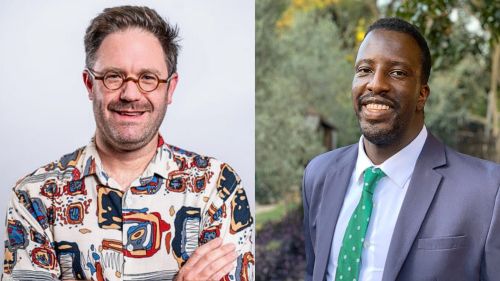
Dr Jonty Cogger is a public interest attorney at the Centre for Environmental Rights (left) and Paul Wani Lado, attorney at the Centre for Environmental Rights. Photo: bird story agency
As Africa weighs how to power its industries and expand electricity access, water must be part of the equation. Ahead of COP31, Dr Jonty Cogger and Paul Wani Lado draw on South Africa’s experience to argue that a just energy transition must test proposed fossil fuel investments against their water demands—and protect the communities whose supplies could come under pressure.
Dr Jonty Cogger and Paul Wani Lado
06 November 2026
South Africa’s energy debate often focuses on electricity supply, energy security and economic growth. Oil and gas infrastructure is increasingly presented as part of the answer to these challenges. This framing hides a key test for any proposed development: whether its promised benefits justify the strain it will put on scarce water, and whether affected communities will carry an unfair share of the costs.
South Africa is a water-scarce country. Local communities increasingly struggle with unreliable water services, crumbling infrastructure and growing demand for water. Given this, plans to expand fossil fuel infrastructure need far closer scrutiny than they usually get.
Climate change makes matters worse by bringing more heat, more drought and less predictable rainfall. Writing for the Endangered Wildlife Trust, Dr Ian Little warns that a strong El Niño during the 2026/2027 summer season could bring below-average rainfall, higher temperatures, lower river flows and less water reaching dams. It could also cut crop yields, strain livestock farming and increase the demand for irrigation. In a country where water and food systems are already under pressure, this combination of risks shows why water security, food security and climate policy must shape any decision to expand fossil fuels further.
Oil and gas are not just a matter of energy policy. Expanding them affects the environment, the climate, water security and the rights of local communities. Yet debates about new gas infrastructure tend to focus on the promise of energy and industrial growth, rather than taking a hard look at the environmental costs and the local communities that may pay them.
Calling gas part of a just energy transition does not make it just. More electricity or investment does not, on its own, tell us who benefits, who pays the environmental, social and economic costs, and whether those costs can be avoided. Nor does calling gas a transitional fuel solve the problems of building fossil fuel infrastructure that will last for decades.
The risk is that South Africa repeats an old development model under the banner of a new transition where powerful economic interests reap the benefits of resource-hungry industry and local communities are left to deal with the environmental costs.
Water makes this contradiction especially clear because it links national energy choices to direct local effects. A project sold as improving energy security may make others less secure if it competes with households, farmers and nature for a limited and increasingly unreliable supply of water.
Putting water at the centre of the just transition means treating it as a firm limit on development, not just one factor to consider after energy and investment decisions have been made. Government should assess from the outset how proposed fossil fuel and industrial projects would affect how much water is available, its quality, and the ability of communities and ecosystems to cope as the climate worsens.
As government considers expanding gas infrastructure and attracting energy-intensive industries, it must account for how much water these developments will need. The critical question is whether the combined demand from multiple developments, together with existing uses and worsening climate pressures, can be met without harming communities’ access to water, the health of ecosystems or the needs of other lawful water users.
This scrutiny must be based on evidence that is public and can be independently checked. Decision-makers should disclose how much water proposed projects need, where that water would come from, the condition and capacity of the water systems involved, what would happen in a drought, and the combined demands of existing and likely future developments.
The same scrutiny must apply to the infrastructure needed to support these developments, including pipelines, power stations and related industrial facilities. Decisions about these projects cannot ignore the water systems and communities they depend on.
Local communities should not have to face less reliable water supply so that fossil fuel expansion and industrial growth can go ahead. If government is serious about a just energy transition, it must require open water assessments that account for climate change and the combined impact of all projects before approving new developments, and it must show that communities will continue to have enough reliable water. Economic benefits should not be assumed to outweigh environmental and social costs; they must be weighed against them.
Dr Jonty Cogger is a public interest attorney at the Centre for Environmental Rights whose work focuses on using legal strategies to challenge pollution and climate change.
Paul Wani Lado is an attorney at the Centre for Environmental Rights where his work focuses on the extractives industry, particularly mining and upstream oil and gas projects.
bird story agency
Leave a Reply