
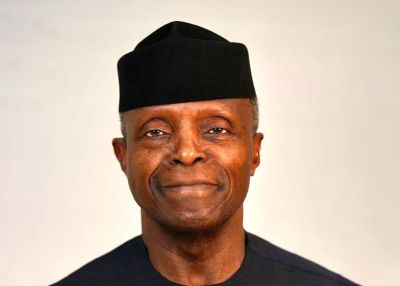
Africa is already helping to shape the new world order through trade, innovation and stronger institutions. Former Nigerian Vice President Professor Yemi Osinbajo argues that the continent must recognise its progress and use its growing influence with confidence and purpose.
By Professor Yemi Osinbajo
I was a young law student at the University of Lagos when the news broke that Nigerian head of state General Murtala Mohammed had been assassinated. What stayed with many of us was not only the shock but the clarity of what he had said only weeks earlier: Africa had come of age, and it should no longer take orders from any external power.
Africa’s destiny, he insisted, lay in our own hands. At the time, that sounded like defiance. Today, much of it reads as foresight.
I have spent decades in public service, including as Vice President. From that vantage point, I learned how difficult it is to move policy into action. Aligning interests, building institutions, managing politics, delivering outcomes: all of it is hard enough in a single country. Multiply that complexity across the continent, and what can look from the outside like inertia often masks something else entirely: the sheer scale of the African project, the weight of historical legacies, and the quiet, steady progress that rarely makes headlines.
That is the conversation I think we now need to have more honestly, including with ourselves. Africa is making real progress, at a scale and speed that even those of us inside the system often underestimate.
Recognising that progress is not a matter of self-congratulation. It is part of how we assert our place in a world that is rapidly reorganising itself, because we cannot shape what we cannot see clearly.
Take the African Continental Free Trade Area. It is easy enough to recite the headline figures: a market of more than 1.4 billion people and a combined GDP of approximately US$3.4 trillion. It is much harder to appreciate what it took to get there: dozens of sovereign governments with different legal systems, competing economic interests and domestic political pressures, all choosing to commit.
Fifty countries have now deposited their instruments of ratification, trading has begun, and the systems are being built in real time.
The early results matter. Kenyan-made vehicle batteries have reached Ghana under AfCFTA. South Africa’s exports under the agreement rose from 485 million rand (approximately US$26.5 million) in 2024 to 1.386 billion rand (approximately US$77.5 million) in the first seven months of 2025. Its exports under AfCFTA preferences include mining equipment, electrical machinery, appliances and plastics, reaching markets across the continent.
Beyond AfCFTA’s early gains, the wider pattern of intra-African trade matters. In my 2024 Boma of Africa lecture, I highlighted figures showing that 41 percent of Africa’s machinery exports were traded within the continent, alongside 35 percent of biopharmaceutical goods and 30 percent of industrial chemicals. These are the foundations of industrial economies, circulating within Africa itself.
The structural story is just as striking. Africa holds around 30 percent of the world’s critical mineral reserves and approximately 60 percent of its best solar resources. By 2050, roughly one in four people of working age globally is projected to be African. These are indicators of a fundamental shift in our weight in the global system, and the world has noticed. From Washington and Brussels to Beijing and the Gulf, capitals that once paid only intermittent attention are deepening engagement across the continent, looking for partnerships in trade, energy, technology and infrastructure.
Africa is being courted. The more interesting story is how Africa is responding. From my own time in office, I watched governments across the continent become more deliberate and more strategic in their engagements. Negotiations are tougher, terms are scrutinised more carefully, and national interests are more clearly defined. Africa is no longer waiting to be offered a seat at the table; we are sitting down at it on our own terms.
This shift goes well beyond rhetoric. Institutions such as Afreximbank are building the financial architecture to support it, including the Pan-African Payment and Settlement System, which enables cross-border payments in African currencies and reduces reliance on third currencies. The same pattern is repeating across sectors. Mobile money, exemplified by M-PESA’s launch in Kenya in 2007, has transformed access to financial services across much of the continent. African entrepreneurs are building companies of global scale.
During the COVID-19 pandemic, African institutions and their partners developed and deployed digital systems to verify test results and vaccination certificates across borders. A WHO report notes that 22 countries had adopted and used Africa CDC’s online portal by 2022.
These are not isolated bright spots. They are evidence of a continent learning to build, deliver and connect at scale.
None of this is to pretend the challenges are not real. Debt burdens, the cost of capital, governance gaps and infrastructure deficits will require difficult, sustained work to address, and we should be honest about that. But these challenges are not unique to Africa, nor do they define us.
Coming of age has never meant the absence of difficulty, but the ability to confront difficulty with clarity and purpose. That is something this continent has shown it can do. What is different today is that Africa has options. In a world fragmenting along new geopolitical and economic lines, our resources, our markets, our young people and our central role in the global climate transition make us indispensable rather than peripheral.
The question is no longer whether Africa matters in the new world order. It is how we choose to use this moment, and whether we have the confidence to recognise and build on what we have already done.
When Murtala Mohammed spoke in 1976, he was issuing a challenge rather than a conclusion. He was calling on a generation to act with confidence, to define Africa’s interests and to defend them.
That responsibility now rests with us, and the evidence of what we are capable of is all around us if we have the eyes to see it.
Africa is not waiting to be included in the new world order. We are already helping to shape it, and it is time we said so plainly, with the confidence that the record of the last three decades has earned us.
Professor Yemi Osinbajo is the former Vice President of Nigeria and currently serves as co-chair of the Future of Development Cooperation Coalition. He also works across innovation, climate finance, global development and public health initiatives focused on Africa’s future.
bird story agency
Leave a Reply