
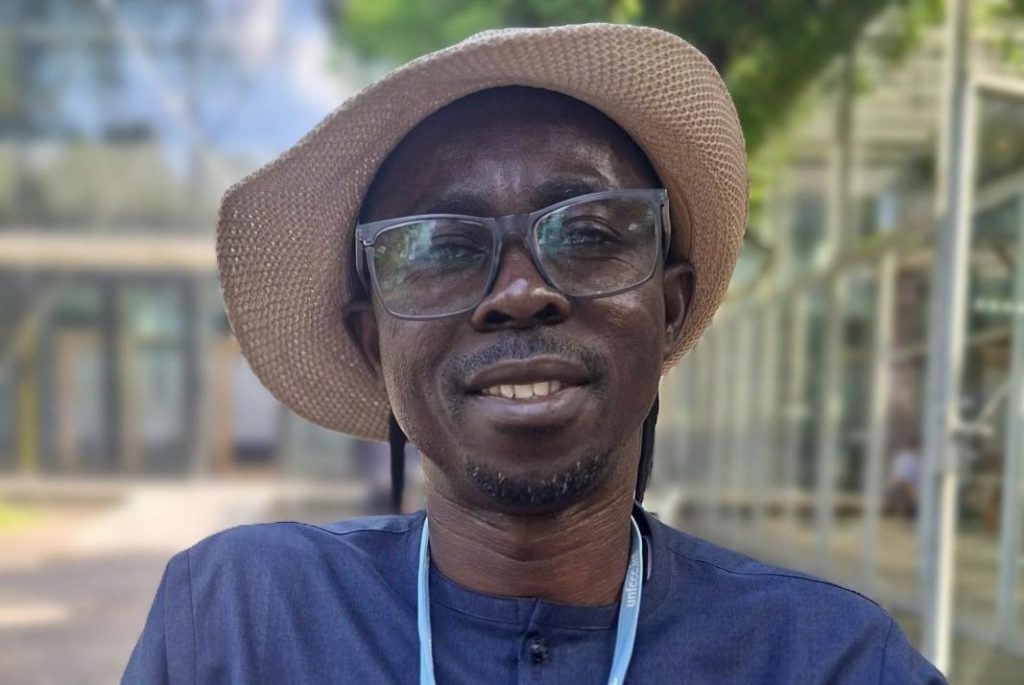
Clifford Erhiyodavew Edevbie, a Niger Delta Environmental advocate/Photo: ©AfricaNewsAnalysis/Sandra Prufer
AfricaNewsAnalysis’ Q&A from SB64 Climate Talks in Bonn
Bonn, 21 July 2026
At the close of the SB64 climate talks in Bonn, a Nigerian environmental advocate from the Niger Delta, Clifford Erhiyodavwe Edevbie, spoke to Sandra Prufer, ANA’s Bonn Correspondent and reflected on the negotiations, the unresolved questions on climate finance and fossil fuel phase-out, as well as the lived realities of communities affected by decades of oil and gas extraction. The conversation also explored the work of the Clean Climate and Environmental Campaign Initiative, which supports frontline communities through advocacy, awareness raising and local assistance.
The UN climate meetings, SB64 talks, took place from June 8-18 and were attended by over 9000 delegates, including government representatives, climate experts + Civil Society observers, in preparation of the COP31 Climate Conference to be held in November in Antalya.
ANA/Sandra Prufer: What were your main takeaways from SB64?
Clifford: Thank you very much for having me join this discussion. I feel privileged and honoured to share my experience. SB64 has been a very important experience for me. Over the past two weeks, I had the opportunity to meet delegates and party representatives from many countries, each bringing their national interests and priorities to the negotiations.
As an observer, my main takeaway is that SB64 ended with many brackets, but not enough breakthroughs. The major issues discussed included adaptation finance, transition away from fossil fuels, implementation, climate justice and the needs of frontline communities. There was a strong demand that climate finance must be delivered now, not left as a future promise.
Many observers and civil society groups also stressed that transition must start with cleaning up communities that have already been destroyed by fossil fuel extraction. There were repeated concerns that the finance currently available is far below what is needed. Adaptation needs are estimated in the hundreds of billions of dollars by 2030, while the loss and damage fund remains far below the scale of annual climate damages.
Another important divide was between calls for a rapid fossil fuel phase-out and the position of fossil fuel-producing countries, which argued for a managed transition based on energy security, jobs and access to power. For Nigeria, this is a difficult issue because a large share of the national budget still depends on oil and gas, even while communities in the Niger Delta continue to suffer the consequences of pollution and gas flaring.
For us in Nigeria and across Africa, the lesson is clear: just transition without accountability repeats past failures. Polluters must pay. International oil companies and national actors must fund cleanup, health support, compensation and renewable alternatives before new drilling is prioritised. Climate finance must be public, grant-based and directed to frontline communities, not only delivered as loans that increase debt.
ANA/Sandra Prufer: You grew up in the Niger Delta. What did you see in your own community?
Clifford: I grew up in Abari village, a small oil-producing community in the Niger Delta. I was born into an environment where the air carried the smell of gas flaring, and the water often had a rainbow-coloured sheen from pollution. My community is one of the places that has powered Nigeria through oil production, yet many people there still wait for reliable electricity.
Every year, we struggle with the environmental impacts of gas flaring, oil spills, leaking pipelines and climate change. Communities like ours depend mainly on two sources of livelihood: farmland and the rivers. Both have been severely damaged. The land people rely on for agriculture and food security has been polluted, and the rivers and streams used for fishing and household needs have also been affected.
The damage has not only affected income. It has affected health, culture, food security and the future of young people. Very little has been done in terms of real damage control, cleanup or support for affected communities. People continue to live with the consequences of pollution caused by multinational companies operating in the region.
ANA/Sandra Prufer: Have local communities received compensation or development benefits from oil and gas revenue?
Clifford: There have been claims that companies pay compensation, but we must ask: what is compensation worth when the damage is so deep? What value can a payment have if land, water, livelihoods and health are destroyed? Some losses are almost impossible to repair. Biodiversity loss, soil damage and the destruction of cultural heritage cannot simply be replaced by small payments.
It is also on record that companies may pay money to government, but because of corruption and weak governance, those resources often do not directly benefit the communities most affected. The people who bear the pollution are not always involved in negotiations, and they do not always receive meaningful support.
Communities must be directly involved as major stakeholders. Compensation should not only be financial; it should include cleanup, access to clean water, healthcare, education, scholarships, infrastructure and support for alternative livelihoods. Those who are suffering the direct impacts of oil and gas operations must be part of every decision that affects their future.
ANA/Sandra Prufer: What does the Clean Climate and Environmental Campaign Initiative do?
Clifford: Our organisation is primarily an advocacy group. We promote research, public awareness and climate education so that communities can better understand the environmental challenges they face and the options available to them. We work to connect people with modern information and practical support that can help reduce their suffering.
Where possible, we also support communities through donations and local assistance. This includes helping provide basic amenities such as clean water, supporting climate-smart agriculture, and raising funds for small loans, especially for women who are often among the most affected by climate change and environmental degradation.
We also focus on young people. We want them to be engaged in climate awareness, environmental protection and community action. The goal is to empower people in affected communities to speak for themselves, defend their rights and build more resilient futures.
ANA/Sandra Prufer: What is your message on the road to COP31?
Clifford: My message is that a just transition must mean repairing land, water and futures. It must put people and cleanup before profit. If communities are left with polluted land, unsafe water and broken promises, then the transition will not be just.
On the road to COP31, leaders must move beyond promises. They must ensure that polluters pay, that environmental defenders are protected, and that climate finance reaches frontline communities as grants, not debt. For communities like ours in the Niger Delta, accountability is not optional; it is the foundation of justice.
Leave a Reply