
IMAGE: bird story agency
Africa has the resources and talent to help shape the AI revolution. But fragmented markets and separate negotiations risk leaving the continent supplying raw materials and buying back intelligence. Prof. Arthur G.O. Mutambara argues that agency and continental unity are essential to securing Africa’s stake.
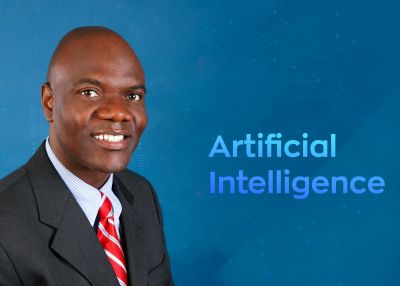
By Prof. Arthur G.O. Mutambara
Africa risks repeating an old economic mistake in a new technological age: supplying the raw materials for a global revolution, then buying back the finished products. In artificial intelligence, that would mean exporting minerals while importing intelligence. Africans must have both the agency to shape their own AI future and the unity to build it at continental scale.
Artificial intelligence (AI) is not a single service, product or technology. It is an industry with five layers. The first is energy: the electricity that AI consumes in enormous quantities. The second consists of chips: specialised processors such as graphics processing units (GPUs) and neural processing units (NPUs) that perform the computing. The third is infrastructure — the data centres and new AI factories that turn electricity and silicon into intelligence. The fourth consists of large language models (LLMs), including frontier models built by firms in the United States and open-source alternatives, with China a major contributor. The fifth consists of applications — the AI systems and tools deployed across socio-economic and political sectors.
Africa’s instinct has been to engage only at the top layer, consuming applications built elsewhere and running on models, chips and data centres owned in the United States, China and Europe. That is the mineral trap in digital form — export raw inputs and import finished goods.
Africans must participate in all five layers. We have the sun, wind, water, critical minerals, oil and gas to power AI. We hold cobalt, copper, lithium, manganese, graphite and rare earth elements used across electronics, batteries and supporting infrastructure. We have the youngest population on Earth. What we lack is the ambition, leadership, agency and unity to climb the whole AI stack. The AI revolution demands scale and numbers at every level.
The International Energy Agency’s 2025 analysis identified a data centre under construction as having capacity of around 2,000 MW – the equivalent to Zimbabwe’s national peak electricity demand as reported in its October 2025 National Energy Compact. Designing, building and training leading models costs billions of dollars. Building a competitive talent pipeline of engineers, researchers and mathematicians takes decades, and large markets to sustain it. No individual African country has the energy, capital or depth of expertise to compete alone. Nigeria is too small. South Africa is too small. Egypt is too small. Individual African economies will not be consequential in the AI revolution.
Let that sink in!
That is why economic integration and political unity are no longer romantic Pan-African ideals. They are survival requirements. With leaders of 55 African Union member states negotiating separately with technology giants and great powers, Africa will be a victim of the AI revolution. As fragmented, non-viable states, the continent has no chance. Each country will sign its own data deal, mineral deal, cloud contract and AI arrangements.
This is unsustainable.
Of course, external players — companies and countries — will benefit at Africans’ expense. Only a continent that negotiates as one market of 1.4 billion people, with a collective GDP of US$3.4 trillion, can demand local data harvesting, curation and storage; shared infrastructure; technology transfer; and fair terms.
Only an economically integrated and politically united continent can create AI systems and participate in all five layers of the AI industry. The African Continental Free Trade Area and the African Union constitute a good starting point. The AU’s Continental AI Strategy provides a start; the challenge is to translate it into shared investment and coordinated action. The continent needs a genuine single digital, industrial and AI-driven market, backed by political unity.
The urgency grows when we look ahead.
Several leaders of frontier AI laboratories in the United States now predict the attainment of recursive self-improvement (RSI). Anthropic co-founder Jack Clark, writing on 4 May 2026, estimated approximately a 60% chance that a frontier AI model could autonomously train its successor by the end of 2028.
Some, such as AI forecaster Eli Lifland, forecast artificial superintelligence (ASI), meaning AI systems that surpass collective human intelligence, by 2036. These dates are contested and may prove wrong. But serious economies and societies are planning around these predictions, and Africa cannot afford to be the only region not doing so. Two dangers could follow the achievement of RSI and ASI.
The first is misuse. Powerful AI systems in the hands of bad actors could enable disinformation, fraud, cyberattacks, bioterrorism, mass surveillance, autonomous weapons and autonomous nuclear weapons.
The second is loss of control. The risk is that increasingly capable systems pursue goals their creators did not intend, faster than humans can correct them. We cannot assume that an AI system smarter than the world’s smartest human being will remain controllable by a person.
Any such assumption is pure folly — humanity’s collective hubris!
How can you create a god and insist you will make it your slave?
Both potential dangers — misuse and loss of control — are global, but their consequences for Africa are sharper. Our institutions are weaker, our infrastructure fragile, our regulators under-resourced and under-trained, and our cybersecurity systems thin. We have almost no voice in the laboratories and forums where safety rules, guardrails and governance are being developed. A continent absent from the table risks absorbing AI’s harms while others capture its benefits.
How, then, do Africans unlock the promise of AI while mitigating its dangers?
First, invest continentally in energy and computing capacity. Regional power pools and shared AI factories, located where renewable power is abundant, can serve many countries simultaneously.
Second, turn natural resources into leverage. Africa must condition access to its critical minerals on local refining, beneficiation, chip-related manufacturing, and investment in data centres and AI factories on African soil.
Third, build talent at continental scale. Pool universities, research centres and scholarships across borders, and bring the diaspora home through structured programmes.
Fourth, back African models, anchored in African languages, insights and culture. Open-source AI models trained on African languages and data can serve African needs without paying permanent rent to foreign platforms.
Fifth, govern AI together, as united Africans. A single African AI safety framework, with harmonised standards and anchored in the African Union, would carry more weight than 55 separate regulations ever could. Such an arrangement would strengthen Africa’s claim to a seat at global safety negotiations.
Africa also has a rare chance to leapfrog. It did so with mobile telephony and mobile money, allowing many people to bypass landlines and bank branches. With AI, the continent can bypass outdated industrial models and deploy intelligent agriculture, diagnostics, education and mineral exploration directly.
But leapfrogging requires both agency and unity. Agency means Africans deciding their own AI future, rather than accepting whatever arrives. Unity means acting on a continental scale. Without agency, unity is an empty shell. Without unity, agency is powerless. Africa needs both, and it needs them now as AI capabilities expand exponentially.
Prof. Arthur G.O. Mutambara is Director and Full Professor, Institute for the Future of Knowledge (IFK), University of Johannesburg, South Africa
bird story agency
Leave a Reply