
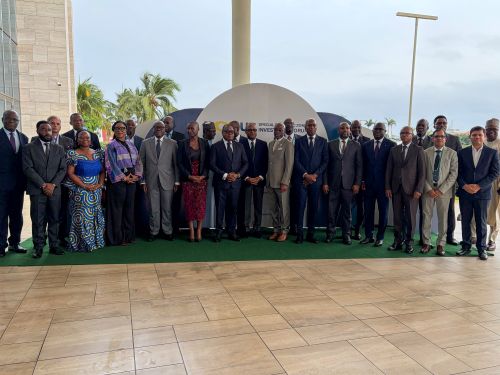
Participants at the Cotonou Investment Forum in Cotonou, Benin, in October 2026. Photo Courtesy: Oceane Sotondji.
Benin is seeking investment to turn more of its cotton, cashews, shea and soybeans into finished products. Discussions at an investment forum in Cotonou highlighted what that expansion will require: reliable electricity, stronger African trading networks and support for local businesses to attract funding.
By Ibrahim Oredola Falola, bird story agency
02 November 2026
Benin’s industrial ambitions and the challenges facing local businesses are no longer taboo subjects. Discussions at the FocusSEZ 2026 investment forum, held from October 21 to 22 in Cotonou, revealed that the country has the potential to move towards increased production of finished goods, guaranteeing sustainable added value and growth.
The discussions centred on attracting industrial investors to the Glo-Djigbé Industrial Zone (GDIZ) and building partnerships between companies in the zone and prospective buyers. Reliable electricity, stronger connections to markets and support for local businesses to develop projects that can attract funding emerged as key priorities.
Co-organised by Afreximbank, Panafritex and GDIZ under the theme “Investing in Industrialization and Value Creation”, the forum linked the expansion of factories to the financing, infrastructure and commercial relationships needed to sustain them.
Thriving factories need open markets
GDIZ is central to Benin’s ambition to move from exporting raw materials to manufacturing high-value products. “At GDIZ, we have transformed 40,000 tons of cotton annually, representing approximately 12.7% of the country’s national cotton production allowing for the manufacture of 50 million garments,” said Létondji Béhéton, managing director of SIPI-Benin S.A., the company responsible for developing and managing the Glo-Djigbé Industrial Zone (GDIZ).
Annual production is projected to reach approximately 100,000 tonnes of cotton by 2030.
“These efforts have helped to increase Benin’s GDP to US$19.4 billion in 2023 for a population of 13.4 million,” said Béhéton. He presented the zone’s expansion as part of the country’s wider economic development. With 17 companies operating on the site, GDIZ is helping to diversify Benin’s manufacturing base. The zone projects that it will create 300,000 jobs by 2030.
For that expansion to translate into sustained business, manufacturers will need buyers and efficient ways to trade across borders.
As a strong advocate of the African Continental Free Trade Area (AfCFTA) Agreement, Afreximbank finances logistics infrastructure and intra-African trade networks.
“One of our flagship innovations is the implementation of the Pan-African Payment and Settlement System (PAPSS) to facilitate transactions in local currencies”, said Jean Arsène Yérima, Regional Director of Operations for Francophone West Africa at the African Export-Import Bank (Afreximbank).
The system is designed to reduce reliance on foreign currencies and overseas intermediary banks when African businesses trade with one another, limiting the need for double currency conversions.
Electricity costs and supply are another test of the zone’s competitiveness. Speaking at the press conference following the forum’s official opening, Béhéton said GDIZ currently supported 25,000 jobs and outlined investments intended to improve energy supply.
“We have just completed the construction of a 30km gas pipeline and we are developing solar power plants, the first series of which will be ready in 18 months, with a production capacity of 300 megawatts to support the zone’s growth, and the surplus will be fed into the national grid,” said Béhéton.
Expert panels on logistics, distribution and industrial hubs reinforced the connection between factory growth and the systems supporting it. Participants also argued that mobilising finance requires more than identifying available capital: businesses need projects that investors can assess and back.
The major challenge lies in the structuring of projects
According to Maryse Lokossou, Director General of the Benin Deposit and Consignment Fund (CDC Benin), Beninese SMEs are gradually moving into processing and manufacturing, but many remain at an early stage. Lokossou said stronger project preparation could help turn business ideas into proposals capable of attracting investment.
“Generally, when we analyse the projects we receive, the main challenge lies in the ability of the project leaders to present a technical and financial structure capable of attracting investors,” she said.
That diagnosis raises a question about who can participate in Benin’s industrial expansion. If local businesses cannot prepare credible investment proposals, they risk missing opportunities as larger investors enter the market.
For Ramanou Kouferidji, founder of a communications group focused on entrepreneurship, support must extend beyond preparing funding applications. He called for a fund to help local businesses grow and retain a stake in the expanding industrial economy.
“Beyond the need to support local SMEs upstream in structuring their projects to be submitted for funding, it is important to create an equity fund to cover and guarantee their development efforts in order to protect and retain added value at the local level”, said Kouferidji.
Together, these contributions pointed to two connected needs: technical support to make local projects ready for investment, and financing suited to their development. Better project preparation could improve access to capital, while targeted financial support could help domestic businesses compete and retain more value locally.
Bridging the gap between quality manufacturing and market needs
A visit to GDIZ’s factories brought the market-access discussion into practical focus. Seeing textile products, cosmetics and ceramic tiles being manufactured illustrated the scope for processing more resources locally. It also raised the question of how manufacturers can turn that production into repeat orders.
“Repeated exposure to brand touchpoints also show how consistency can spark interest and encourage people to seek more information about a business,” said Kenyan marketing and strategic partnerships expert Stephanie Wambua.
“This experience highlighted that expanding intra-African trade demands bridging the gap between quality manufacturing and market needs, while offering vital insights into regional business realities,” added Wambua.
The discussions in Cotonou suggested that Benin’s next industrial gains will depend on connecting these elements: factories with reliable power, local businesses with suitable finance, and manufacturers with dependable markets.
Expanding production is one step. Retaining more value will also require the commercial and financial foundations that allow businesses to keep growing.
bird story agency
Leave a Reply