IMAGE COPYRIGHT: World Health Summit
BERLIN, 11 October 2026 — A new Lancet Commission launched at the World Health Summit 2026 has issued a clear warning: 17 interconnected threats pose systemic risks to human health, economic resilience, national security and decades of global development.
Published in The Lancet, the Commission on 21st Century Global Threats to Health draws on evidence from 204 countries and territories to give governments, funders and industry a common framework for assessing risks too often managed in isolation. Its conclusion is unequivocal: decisions taken now across health, finance, climate, defence and technology will determine whether future generations gain—or lose—years of healthy life by 2100.
Seventeen risks, one shared challenge
The assessment identifies nuclear conflict and the malicious use of artificial intelligence as threats with extinction potential. It also identifies air pollution, antimicrobial resistance, naturally occurring pandemics, climate change, conventional conflict, declining development assistance for health, childhood malnutrition, high alcohol consumption, high blood pressure, income inequality, low educational attainment, obesity, poor mental health, smoking and unhealthy ageing as major threats requiring coordinated action.
The Commission moves beyond conventional rankings based only on probability or mortality. It calculates the healthy years of life that effective policy, investment and innovation could preserve. For each threat, researchers modelled plausible best- and worst-case futures and quantified the difference in avoidable disability-adjusted life years, or DALYs. The analysis gives decision makers a direct basis for prioritising action where it can deliver the greatest gains.
A three-part roadmap
The Commission sets out three priorities. First, governments must build threat-ready health systems capable of maintaining essential services during shocks and mounting rapid responses across borders and sectors. Second, public and private funders must accelerate investment in breakthrough innovation, including tools to counter infectious disease and antimicrobial resistance and technologies that reduce chronic disease and environmental risks. Third, countries must establish stronger, continuous surveillance of emerging threats so that authorities can intervene before risks become emergencies.
The roadmap rejects the long-standing separation of health policy from economic and national-security planning. Outbreaks, conflict, climate shocks and social inequality can simultaneously disrupt labour markets, supply chains, public finances and political stability. The Commission therefore defines health resilience as a strategic investment: one that protects lives, limits economic losses and strengthens national preparedness.
From crisis response to long-term resilience
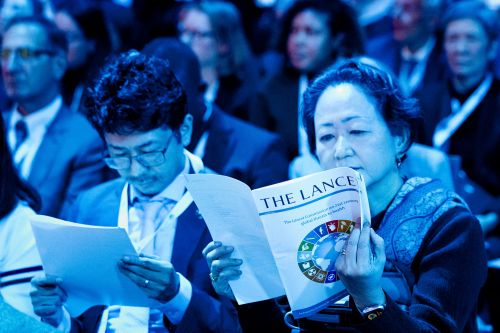
The report was unveiled as global health leaders convened in Berlin under the Summit theme “From Crisis to Resilience: Innovating for Health.” Its publication intensifies the case for decisive action on pandemic preparedness, health-system financing and the governance of rapidly advancing technologies.
The Commission’s message to policymakers is direct: catastrophic risks are interconnected, but catastrophic outcomes are not inevitable. Governments that coordinate planning, sustain investment and strengthen early detection can protect population health, reinforce economic and national security, and equip societies to withstand the shocks ahead.
Dr. Richard Horton, Editor-in-Chief of The Lancet adds that: “This Lancet Commission offers a radical conceptual shift in the way we think about future threats to human survival. It invites us to expand the array of dangers facing humanity, moving from single issues to a broader and more complex landscape of threats, which demands a much more extensive framework for coordinated action. The jeopardies that face us are multiple. Our solutions need to match that reality.”
Commission Co-Chair Dr. Kanem notes: “Recent global events show us just how quickly stability can give way to crisis, and how costly it is to respond only after disaster strikes. And the global threats to health risk amplifying existing inequalities, with the greatest burden falling on the most vulnerable communities. Yet the future is not inevitable. The Commission makes a compelling case for reshaping the future by embedding foresight into decision-making. Governments and communities must act decisively starting today, to protect health and build a fairer, more peaceful and more secure future for the coming generations.”
About the Commission
The Lancet Commission on 21st Century Global Threats to Health brings together 35 Commissioners spanning health, economics, security, governance and technology. It assesses generational risks to health over a 75-year horizon (2025–2100), drawing on analysis across 204 countries and territories.
The Commission is designed to support earlier, more coordinated action – identifying where policy, investment and innovation can make the greatest difference. It measures this using amenable DALYs: the burden of disease and disability that could be avoided through targeted action.
The Commission is funded by the John Stanton and Teresa Gillespie Family Foundation and Pax Sapiens.
About IHME
An independent population health research organization based at the University of Washington School of Medicine, the Institute for Health Metrics and Evaluation (IHME) works with collaborators around the world to develop timely, relevant, and scientifically valid evidence that illuminates the state of health everywhere. In making our research available and approachable, we aim to inform health policy and practice in pursuit of our vision: all people living long lives in full health.
About The Lancet
Founded by Thomas Wakley in 1823, The Lancet began as an independent, international weekly general medical journal with the vision that it should drive social and political change through advancing medical research and science for the greater good. Since its founding, the journal has evolved to include 30 titles that are part of The Lancet Group while retaining the core belief that medicine must serve society, that knowledge must transform society, and that the best science must lead to better lives.
About the World Health Summit
The World Health Summit is the leading platform for global health. Founded in 2009, it brings together stakeholders from politics, science, the private sector, and civil society to set the agenda for a healthier future. The annual Summit is held every October in Berlin, organized by the WHS Foundation GmbH, a 100% subsidiary of Charité – Universitätsmedizin Berlin. The Summits are complemented each year by a WHS Regional Meeting held in a different part of the world, where regional health priorities take centre stage.
Leave a Reply