
IMAGE: bird story agency
The agreement ends a 33-year absence from the continent and puts a purpose-built circuit in Bugesera at the centre of Rwanda’s plans to expand tourism, investment and international sports business. The next test is whether the country can turn the global championship into lasting economic opportunities for local businesses and communities.
Bonface Orucho, bird story agency
13 October 2026
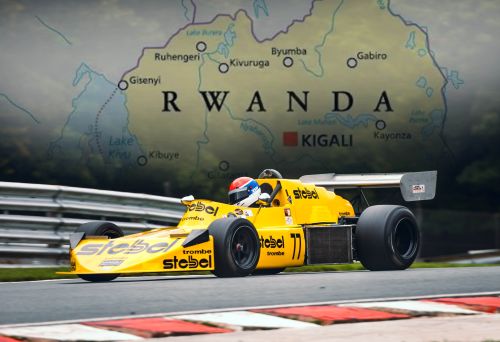
Formula 1 will return to Africa under a 10-year agreement with Rwanda, ending a 33-year absence from the continent and moving the long-running campaign for an African Grand Prix from competing bids to a confirmed host.
The Formula 1 African Grand Prix, presented by Visit Rwanda, is expected to join the championship calendar in the early 2030s, once a purpose-built circuit in Bugesera, south of Kigali, has been completed.
In its announcement on 13 October, Formula 1 said the agreement followed years of collaboration to establish the foundations for a “successful, sustainable and world-class Grand Prix”.
The event will form part of a wider sports, tourism, infrastructure and commercial development project led by the Rwanda Development Board.
“This is not simply about hosting a Grand Prix. This is about creating legacy and inspiration, a legacy of tourism and investment, a legacy of skills, education, and opportunity,” said Stefano Domenicali, president and chief executive of Formula 1, at the launch in Kigali, earlier today.
Domenicali said the partnership with Rwanda and the FIA would extend beyond the race weekend, creating opportunities for local businesses and communities while connecting African fans more closely with the championship.
Formula 1 estimates that more than 100 million fans across Africa follow the sport, with almost 60% of fans in key African markets under the age of 35. Domenicali also cited a global audience of more than 800 million fans, positioning the agreement as part of the championship’s wider expansion into new markets.
Rwandan President Paul Kagame described the development as an opportunity for the continent as well as his country, saying the ambition extended beyond securing one race on the calendar.
“Ultimately, what we want is for the African Grand Prix to pave the way for other races to be hosted on the continent,” Kagame said. “This is not impossible to achieve, and what we are doing now proves this.”
FIA President Mohammed Ben Sulayem made a similar point about the event’s identity. “It’s not called Rwandan F1. It’s called Africa,” he said, describing the announcement as the start of a new chapter for the championship on the continent.
The agreement follows almost two years of public campaigning by Rwanda to secure a place on the Formula 1 calendar. Kagame formally announced the country’s bid in December 2024 during the FIA General Assembly and Awards ceremony in Kigali, building on Rwanda’s efforts to attract international sporting events.
The championship has been absent from Africa since the 1993 South African Grand Prix at Kyalami. South Africa has pursued upgrades to the historic circuit, while Morocco has proposed a major motorsport complex near Tangier. Nigeria and Zanzibar have also advanced proposals to host a Grand Prix.
Rwanda’s agreement gives it the first confirmed hosting arrangement among these recent African bids. South Africa remains interested in bringing Formula 1 back, meaning the agreement could become a starting point for renewed efforts to establish a broader African presence on the calendar.
For Rwanda, the immediate task is infrastructure delivery. The planned circuit will be located about 40 kilometres south of Kigali, next to the new Kigali International Airport, and developed to the FIA Grade 1 standard required to host Formula 1.
A circuit concept presented at the launch showed a track stretching approximately six kilometres, with 17 corners, an anti-clockwise layout and an elevation gain of 197 metres per lap. The design is intended to use the area’s natural contours to create a demanding circuit for drivers and varied viewing opportunities for spectators.
Formula 1 and the Rwanda Development Board also intend to develop the venue into a year-round destination for international motorsport, conferences, entertainment and other major events. The wider development is designed to generate demand for hospitality, transport, catering, event services and other businesses beyond the annual race weekend.
Kagame said the project would involve substantial private-sector participation, with investors among those attending the announcement. He also argued that the Grand Prix formed part of a wider economic strategy rather than being an objective in itself.
“We are not looking at just Rwanda alone. We are looking at Rwanda in the context of a continent,” he said, adding that the country wanted other African markets to participate in the opportunities created by the project.
The scale of those opportunities will depend on the investment required and how much economic activity can be retained locally. Formula 1 and the Rwandan government have not yet disclosed the circuit’s construction budget, the detailed financing structure or a projected economic impact. The inaugural race date and development milestones will be announced later.
Rwanda enters the project with an established tourism and international events sector. According to the Rwanda Development Board, tourism revenue reached US$685 million in 2025, up from US$647 million in 2024, while visitor arrivals rose to 1.49 million.
The country’s meetings, incentives, conferences and exhibitions sector generated US$94.7 million in 2025 from 165 international and regional events. Formula 1 could build on this existing market by bringing additional international visitors, extending hotel stays and increasing demand for local services.
Recent Grand Prix assessments show the potential scale of the business, but also the importance of costs. In Australia, the 2025 Melbourne Grand Prix increased Victoria’s gross state product by an estimated A$323.9 million, equivalent to about US$225 million, and supported 1,631 full-time-equivalent jobs. The Victorian government estimated that the event generated A$3.08 in economic impact for every dollar invested by the state.
Singapore offers a longer-term comparison. According to the country’s Ministry of Trade and Industry, the Singapore Grand Prix generated more than S$2.2 billion in incremental tourism receipts between its launch in 2008 and 2024, equivalent to about US$1.72 billion at October 2026 exchange rates. However, the estimated annual cost of organising the event averaged S$140 million, or about US$109 million, between 2022 and 2025.
South Africa’s earlier experience provides a historical reminder of the financial demands involved. Kyalami hosted championship races in 1992 and 1993, but financial difficulties and the cost of staging an international event amid currency pressures contributed to the race’s departure. Comparable economic-impact assessments from that period are not readily available, making modern host-city data a more useful benchmark for Rwanda.
According to Mohammed Ben Sulayem, the FIA would continue working with Rwanda to develop the circuit to international safety and sporting standards, while supporting grassroots initiatives such as karting to widen access to motorsport.
The objective, he said, was “to create opportunities for young people across Africa, not simply to bring an international event to the continent.”
“For many years, we have spoken about our desire to return, but always said we would return in the right way, with the right vision and the right partner. That partner is Rwanda,” Domenicali stated at the launch.
bird story agency
Leave a Reply